Author: Michael Kelley
Mark Brnovich’s Legacy in Sleep Dentistry Lives On Through ASBA
It is with a heavy heart that the Board of the American Sleep & Breathing Academy (ASBA) shares this tribute to the late Arizona Attorney General Mark Brnovich. As our Academy mourns this unexpected loss, we feel compelled to honor Mark’s extraordinary contributions—not only to ASBA, but to the advancement of sleep health and dental sleep medicine worldwide. Mark was a devoted advisory board member for decades and played a pivotal role in helping our organization grow in both reach and impact. Mark was not an ordinary public servant. He led with authenticity and integrity, always speaking truth and fiercely protecting the mission of ASBA. Working closely with our members, he quickly recognized how profoundly underdiagnosed and undertreated sleep apnea remains across the globe. He understood the powerful connection between airway health, sleep, and systemic illness—from Alzheimer’s and dementia to cardiovascular disease and beyond. Mark frequently attended and spoke at ASBA’s annual conferences, lending both credibility and conviction to our mission. He supported our research and publications for many years, and he lived the message himself—receiving treatment for his own sleep apnea from an ASBA-accredited dentist. In an unfortunate twist, he lost his appliance while traveling and had not yet had time to replace it. Mark’s influence extended far beyond dentistry and public office. Through ASBA’s relationship with the NFLPA, he became a trusted advocate for athlete health as well. NFL superstar Andre Collins, a longtime supporter of sleep education for professional athletes, shared upon hearing of Mark’s passing: “This one really hurts. Mark was a real one—brilliant, principled, and deeply human. He cared about people in a way you don’t often see in positions of power. The world lost someone special.” ASBA CEO David Gergen, Mark’s dear friend, sends his love and deepest condolences to Mark’s family and wants them to know how profoundly special Mark was to him: “I’m shocked and devastated. The country lost a great man. Mark was like a brother to me, and the loss is huge to our organization. He inspired us to make significant changes in the sleep industry, and his legacy will live on in the doctors we educate and the patients we serve.” In addition to serving as Arizona’s Attorney General, Mark held numerous distinguished government roles. A dynamic leader, devoted husband and father, and loyal friend, Mark Brnovich stood with ASBA in both vision and action. We will miss him dearly. His legacy will endure in every practitioner we educate and every patient whose life is improved because he chose to stand with us.
ASBA Shines at NFLPA Sleep Apnea Screening in San Francisco
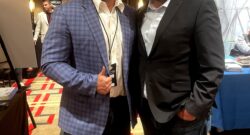
Congratulations to ASBA’s Diplomate, Toshi Heart who shined at the NFLPA screening for sleep apnea in San Francisco this past weekend! Toshi has always been a long time San Francisco 49ers fan ever since she moved to the Bay Area. Her extensive knowledge in epigenetics proved to be very useful at the NFLPA screening. The Legendary Stanford Football Great, Devin Cajuste, former San Francisco 49er tight end and the star of the TV program hard knocks when he was on the Cleveland Browns. He showed Dr. Toshi Hart his rings and explained the different powers that they would channel through his body. He also was carrying a staff for Greater balance and proclaimed to be a real life Druid. John Gergen was doing the intake for the sleep apnea test and overheard all this talk about a true life Druid. John couldn’t believe his ears because he was in part raised by a true life Druid by the name of Bill Jarnigan. Druid Bill, as he was finally known as, was also one of the finest Orthodontic Technicians in the country and one of the staples at Gergen’s Orthodontic Lab. John was extremely impressed with Toshi’s knowledge of the Hertz Frequency that his rings were giving off and that the Open Loop Cricket also gives off a Hertz Frequency of 50! It was wonderful to see these football legends talking with Dr. Hart about Epigenetic and about Energy & Hurtz Frequencies and all that great stuff! Dr. Hart was selected for the screening because of her vast knowledge of sleep apnea and the different ways to treat this dangerous disease. She is was appointed as the latest member of the team that works under the direction of Andre Collins at the NFLPA. Overall it was a very successful meeting! The Sleep Division of the screening treated over 30 former ball players. David Gergen, The founder of Gergen’s Orthodontic Lab in Phoenix, AZ and the CEO of the American Sleep and Breathing Academy, was heard talking with Andre Collins about how many lives they have saved with this program over the past 15 years. There is no official number, but as the gentlemen were saying they both feel it’s very high. The event came synergistically with of feeling of “Family.” They were all so friendly and tight knit, yet you could really sense that they all cared about what they were doing. It is ASBA’s mission to provide the best treatment for the former players. It was a joy for me to take part in such a great event. I’ve never seen professionals of these caliber caring so deeply about what they were doing and made me feel really great to be a part of this professionalism. The really neat thing that I liked about it was that this screening was all free for the retired NFL players & wives. The NFLPA picked up the entire bill for the former players! Andre Collins, who is a fantastic guy, said “Even the laser treatments are being covered as well!”What a fantastic event we experienced! We are very excited for all of the upcoming events this next year. We can only hope & work hard to make these future screening be ever so amazing as this past one.
The Bionator: A Versatile Appliance for Class II Correction Through Mandibular Translation — Michael Hansen
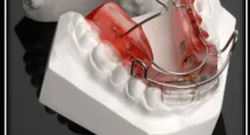
The Bionator – A Versatile Appliance for Class Two Correction via Mandibular Translation. The Bionator has been an instrumental appliance in my practice for many years. In this era of airway focused dentistry and treating the structural causes of sleep disordered breathing, we find that mandibular entrapment is right up there with the most common of cofactors. As such there is great value in relieving that entrapment, often via maxillary arch development. Once the maxillary and mandibular arches are coordinated in size, it is often necessary to assist the mandible in its final path to ideal position for both temporomandibular joint function and maximization of pharyngeal airway volume. The Bionator may just be the tool you are looking for. Much of what I hope to share with you in this article I have learned from Dr. “Skip” Truitt, a friend and mentor and certainly a pioneer in maxillofacial orthopedics and orthodontics. I will of course sprinkle in my own experience with the appliance over the last 15 years or so. The Bionator was developed by German orthodontist Wilhelm Balters in the 1950s as a less bulky, more comfortable modification of an older “activator” appliance. Today, there are three basic designs for the Bionator: The Bionator to Open, Bionator to Close, and Bionator to Hold. Each of the names refers to the vertical dimension you want to achieve with the appliance. The Bionator to Open is used to distract and translate the mandible down and forward correcting a skeletal class II relationship and OPEN the deep bite. Similarly, the Bionator to Close will distract and translate and CLOSE the open bite and the Bionator to Hold is designed to hold the vertical dimension present in the case but still distract and translate the mandible. It is, of course, important to know when it is appropriate to use the Bionator. Most of our patients with retrognathic mandibles end up in that position as a result of mandibular entrapment. Structurally speaking, there are 5 clinical occurances that will trap the mandible back in position. These are, in order of prevelence: A Narrow Maxilla, entrapment begins when the mandibular arch width exceeds maxillary arch width Deep bite, entrapment begins when the incisal overlap exceeds approximately 1/8th of the mandibular incisors Retroclined Maxillary Incisors, known orthodontically as a dental division 2. Typically, this begins when the upper incisal angle drops below 115° relative to the Frankfort Horizontal plane. A short maxillary length in the AP or sagittal dimension relative to the cranial base. A Maxilla that is retrusive or back in position relative to the cranial base. Once these entrapping factors have been mitigated with proper and adequate development of the maxillary arch, with the exception of the deep bite, then you are good to treat with the Bionator. A good rule of thumb is to have the patient posture forward and see if the arches align. This trick is best coupled with an evaluation of the Schwarz-Korkhaus dimensions of the case as these can be helpful guidelines for arch coordination but also give you clues about tooth angulation. Arch coordination of course is important because we do not want to position a mandible forward to couple with a maxilla that is too small in any dimension to properly join with it. At best we create unstable occlusion that will relapse when allowed to function and at worst we create a crossbite. But, once entrapment is relieved and arches are coordinated, it’s Bionator time. Let’s look at the Bionator to Open. It, like all bionators, is what is known as a demand position appliance. This means the appliance forces the patient into a certain position. Its value, uniqueness, and advantage over some other class II correctors is its ability to couple the upper and lower portions of the appliance together in one and maximize anchorage. The Bionator to open is designed to translate the mandible, (bring the mandible down and forward) and open the vertical dimension. In it, we cap the anterior teeth with incisal coverage of acrylic, keeping the anterior teeth from erupting and allowing the posterior teeth to erupt and correct the VDO as we translate. The Bionator to Open, like all Bionators, has flanges on the lingual to both block the tongue from engaging in the inter-arch space between the teeth and guide erupting teeth into position when the time comes. This can be a very effective tool against a lateral tongue thrust. Also notice that the palate is open, leaving room for myofunctional therapy to work on developing a correct tongue posture up in the palate. The posterior segments of acrylic are carried to the height of contour. This prevents the posterior teeth from erupting until we grind the acrylic away. This gives us more control as clinicians on how and when we erupt the posterior teeth. It also gives us the ability to stop the bite opening effect by halting the adjustment of acrylic when the desired VDO is achieved. All Bionators contain a transpalatal arch wire that connects the posterior segments of the upper arch and improves the anchorage against unwanted distalizing forces in the upper arch. The TPA is given an omega loop to allow us to relieve tension if the transverse screw should be activated. Otherwise it remains inactivated. The transverse screw is placed in lower portion of the appliance to allow for minor transverse development enabling the keystoning of the mandibular canines if we missed the mark in our development phase. The rate of turning will depend on wear time. This screw should not be turned until after a 90 day holding period. Wear time for the Bionator ideally is continuous, removing it only for eating and hygiene. When worn in this fashion it will produce translation and eruption at the fastest pace the body will allow (usually about 6 months). Typically the appliance is worn without adjusting any posterior acrylic for 90 days. This allows for better control of the horizontal forces as well as the muscle lengthening, and ligament orientation. While continuous wear is ideal for treatment, it is not ideal for many patients. The outcomes of Bionator therapy can be achieved with nighttime wear only as long as two points are understood. One, it will slow down the overall treatment time and two, there is a risk of arch collapse during the day if the tongue is not adequately supporting the maxillary arch. To mitigate this, I will have my patients in myofunctional therapy AND have them wear the Bionator during the day for 5 to 10 minutes periodically throughout the day. How periodically depends on the stability of the arch and how “tight” the Bionator feels in the mouth upon reinsertion. In my practice the Bionator is used on the prepubertal patient. It is a fantastic appliance to hold the arch space, translate the mandible and alter VDO while transitioning the dentition from primary to permanent. It can be used on adults with success, but I often find other appliances that allow me to achieve these goals in the adult dentition while addressing other orthodontic needs and thus diminish the overall treatment time. But, there are situations where a Bionator can be a very appropriate choice in the adult patient. The desired outcome of Bionator use is to translate the mandible. Dr. H.P. Bimler described mandibular translation as changing the size of the mandible and the position of the mandible relative to the cranial base. Mandibular translation ultimately is the term used to describe the movement, relative or otherwise, of the mandible from a class II to a class I. Depending on the age of the patient and the situation, this can happen any one of four ways or a combination of all four. If you look in the literature these changes are well documented. These are, 1) increasing the size of the mandible (Bimler), 2) Altering the shape of the mandible (Hans & Enlow), 3) Erupting the mandibular alveolar process (Woodside), and/or 4) Remodeling the condyle and TMJ (Wieslander). Horizontal forces are introduced with any class II corrector and the Bionator is no exception. The greater the distance to translate, the heavier the horizontal forces. These forces initially are produced by the muscles of mastication retracting in response to the new demand position. The forces produce a distalizing force on the maxillary arch, and a mesializing force on the lower arch. These forces tend to stay active for roughly 90 days. In most cases the forces on the teeth are not desirable, the forces on the bone are desirable. As such, proper anchorage must be attended to in order to mitigate the undesirable forces and their effects. Without accounting for these forces, they can result in a dumping or proclination of the lower incisors as well as a distalization of the maxillary posterior teeth. Because of its unique anchoring abilities, the Bionator sees minimal distalization of the maxilla and the maxillary teeth relative to other appliances. Insertion adjustments for the Bionator to Open include adjusting the labial bow, to be in firm contact with the gingival third of the incisors, relieving the lingual acrylic contact from the lower incisors, and not adjusting the posterior acrylic (for the first 90 days). The Bionator to Open contains a 0.040 Hawley labial bow, 0.036 lap springs, and a 0.044 Coffin wire for the transpalatal support. When seating the Bionator it is critical for the labial bow to be adjusted to be in firm contact with the gingival third of the maxillary incisors. When placed at the gingival 1/3rd the force is at the fulcrum of the tooth and will not change the tooth angulation but will maintain it while anchoring. If development left the incisors flared facially in a division 3 angulation, you can place the labial bar in firm contact on the incisal 1/3rd and retract the incisors. This of course needs to be monitored until the desired angulation is achieved. Once achieved, the bar is moved to the gingival 1/3rd to maintain angulation and anchorage. The labial bow is adjusted typically with reciprocal adjustments with a 3-jaw plier. The activation as shown on the left with the 3-jaw on the superior loop will pull the bar in lingually insuring firm contact with the teeth. The activation shown on the right with the 3-jaw on the inferior loop will pull the bar gingivally to ensure maintainance of the tooth angulation and anchorage. To undo the activation simply place a flat on flat plier in the same place and squeeze gently until you have the desired position. If angulation of the lower incisors is ideal when you first seat the Bionator, you will want to relieve the acrylic from the lingual of the lower incisors to prevent the horizontal forces from dumping or proclining the lower incisors. If, on the other hand you have retroclined lower incisors (say from a digit habit) that you did not fully correct in the development phase, it is then desirable to leave the lingual acrylic in contact so as to correct the lower incisor angulation through proclination from those horizontal forces. Once the angulation is ideal, simply relieve the lingual acrylic to maintain the desired angulation. In either situation, it is important to leave the incisal cap of acrylic to control the VDO. The lab fabricating the Bionator should leave the lower lingual intaglio unpolished with a matted finish. After the 90 day holding period the lower posterior teeth will have polished the areas on the acrylic they contact. This will be where we adjust, at the heights of contour, to allow eruption to happen that will correct the vertical dimension. If done correctly, after some experience, this can be a one time adjustment. Until you get a feel for this, you may want to see the patient every 3-4 weeks to adjust incrementally at the shiny areas until the desired VDO is achieved. This adjustment can be modified to create mesial stops for the molars or premolars to prevent arch length loss from mesial drift in the appliance. Not preventing mesial drift can lead to arch length loss (posterior teeth incorrectly forward in the arch) that will greatly complicate the orthodontic finish. Often if there was a great deal of development done to the maxillary arch, the demand position will create a dental class III relationship. In that case the maxillary stops can be relieved to allow mesial drift and correction. The specific adjustments made to the posterior acrylic highlight the Bionator’s versatility. In general, the lower acrylic is relieved, using the wear facets as a guide in the skeletal class II patient. Both upper and lower acrylic are adjusted in a skeletal class I patient. Occasionally you may come across a pseudo class III, this is a class I that may have an extreme curve of Spee and/ or an extremely deep bite causing the illusion of a class III (much like a denture patient that has lost severe VDO). In that unique situation I can only adjust the upper acrylic and allow the maxillary posteriors to erupt vertically to support the vertical dimension. The important point to understand is that the Bionator is ground according to the skeletal class of the patient. However, a combiniation of these methods can be used to adjust or treat a cant in the occlusion by relieving mandibular acrylic on the low side of the cant, maxillary acrylic on the high side of the cant. Or, you can continue adjustments on the low side and stop adjusting the high side when molar contact is achieved on the high side but continue adjusting the low side and allow the low side to continue erupting until level. Which you choose will depend on the skeletal class and the curve of Spee. To aid in speed and predictability of eruption, place separating elstics mesial and distal to the teeth you want to erupt. Another helpful feature of the Bionator is the addition of lap springs. These can be helpful if the upper incisors did not straighten or if the division 2 retroclination of the incisors was not fully corrected in the development phase. It is also applicable if we over tightened the labial bar and created a division 2. The lap springs are activated by gripping the wire with a Jarabak plier and pulling toward the lingual of the incisors aproximately the width of the bar itself. This can be continued monthly until the desired angulation is achieved. Retention for the Bionator can be as variable as the clinitian desires. The original Bionator was a floating appliance that uses the acrylic contours and tight contact of the labial bow as the retentive features. Many practioners, including myself, prefer to have an adams or delta clasp on the upper 1st molar. Perhaps one of the most retentive designs is one from Dr. Derek Mahony with Delta clasps, ball clasps and C clasps. When managing the case, you have to make sure that your retentive features are not interfering with the goal of the appliance. Many clinitians will start with maximum retention and then start removing clasps as they hinder the goals. Derek Mahony with Delta clasps, ball clasps and C clasps. When managing the case, you have to make sure that your retentive features are not interfering with the goal of the appliance. Many clinitians will start with maximum retention and then start removing clasps as they hinder the goals. Now lets talk about the Bionator to Close. The bionator to close has many similarities to the Bionator to open. It has the same labial bow that needs to be in tight contact with the incisors, same rules apply in regards to lower lingual acrylic in terms of relief of lingual contact. However differneces in design revolve around the goals regarding the management of the VDO. The class II open bite is typically caused by a low and/or forward resting tongue posture and anterior thrusting swallow that results in an anterior open bite and excessively errupted posterior teeth. The design of the Bionator to close targets these things. It has a posterior cap of acrylic with an open anteiror. This allows for the intrusion of posterior teeth, the eruption of anterior teeth, and an autorotation of the condyle as the VDO closes. These patients will often be functioning off the disc as the thrust creates reciprical distalizing forces on the condyle to mesially displace the disc. We will often see an initial and rapid improvement in bite closure in these patients. This is typically attributed to the autorotation of the condyle back on the disc (or articular cartilage for the pediatric patient). The remainder of closure takes longer and is attributed to the intrusion of posterior teeth, eruption of anterior teeth and a realigning of the cranial sutures. The Bionator to Close will often contain a posterior myo bead to intice tongue lift and tongue wires bent to guard against tongue thrust and/or forward resting tongue posture. Unlike the Bionator to Open, it does not need adjsutment of the posterior acrylic. As such, it becomes more difficult to correct a cant. One side can be thinned relative to the other but it needs posterior pressure for optimal closing effect. Just remember the more you close the vertical dimension, the more the condyle is rotating forward on the disc. That is why a skeletal class 1 open bite is never repositioned, and a skeletal class 1 deep bite is always repositioned (details to come when we discuss the construction bite). Rarely seen but equally important is the Bionator to Hold. I say rare, because we just don’t often see clinical scenarios where the vertical dimension is ideal but only the AP position has been affected by the derrangements that led to the retrusive mandible. However, when you do come across one, it is good to know how to translate without altering the VDO. In this scenario we cap both the anterior and posterior. When fabricating a Bionator, it is helpful for the lab if you will send a construction bite (digital or otherwise). The nuances of the bite will vary depending on the type of bionator you are going to use. This is where the Ceph tracing can be helpful because we can determine from it the predominant direction of growth. For example if the Ceph suggests the patient is primarily a vertical grower, the bite will open faster than the mandible will translate. If they are primarily a horizontal grower, the mandible will translate faster than the bite will open. Once we get a good feel for this we can alter the construction bite accordingly. It is important that the bite is made with condyles correctly seated on the articular disc. Typically, having the patient open as wide as possible and positioned vertically (not leaned back in the chair) when making the construction bite will ensure this. It is also critical that the skeletal midlines are aligned in the construction bite. Many times through the course of dysfunction the dental midlines will drift to accommodate the skeletal shifts. It is important to correct this to prevent future TMD concerns. Typically, the mid palatal sututre and center of the face are good markers for the maxillary midline. The lingual and labial frenums mark the mandibular midline. In general, when fabricating a Bionator to Open, (correcting a deep bite) it is ideal to position the mandible so that the incisors are end to end and separated by 2mm. Both the positioning and the separation can be made with a proper bite stick or jig. There are several graduating types on the market. In general I prefer the type that have notches for forward positioning but the articulating surface is rounded to allow pitch, yaw and roll of the mandible as it finds its forward position. To create a bite construction for a skeletal class I deep bite patient we perfom the same steps for a skeletal class II patient but increase the VDO to 4mm at the incisors. In the case of the skeletal class I deep bite we can open the vertical more and get to the finish line faster because we know we are looking at a mild or pseudo class 2 and there is little translation that has to happen and mostly just vertical opening that is desired. Creating a construction bite for the open bite patient is more challenging but many of the same rules apply. We still want skeletal midlines lined up, condyle on the disc, and positioned end to end in the AP dimension. The difference of course is that the patient usually can’t achieve an end to end contact with the incisors. In this case we still use a graduated bite stick or jig but we only open them wide enough to achieve a 1.5mm clearance of the most posterior teeth. This ensures we have adequate thickness of acrylic to withstand the occlusal forces with the least amount of bite opening. To achieve this we may have to add bite registration or compound to the jig. There are some final adjuncts worth talking about. As the Bionator is often a final orthopedic appliance, there are some addtions that can be made to aid in the finalization. Whenever possible, finalization of tooth positions should be done prior to the bionator phase. But in those instances where it just didn’t happen you can add them to the appliance. For example, if the lower incisors are not in an ideal position, you may choose to leave them that way for the first 90 days for added retention, then use lap springs or a finger spring to correct their position. Or, you can adust the dental midline with a cross-over wire. When doing this you have to make sure to clear a path for movement in the acrylic. Another adjustment that is sometimes needed is a subsequent adjustment of the acrylic contacting the linguals of the lower incisors. If this has been done once already but the lower incisors start to procline it means they are again in contact with the ligual acrylic. This can be attributed to shifts that happen in the cranial sutures as a consequence of the various pressures the Bionator places on them. Simply relieve the acrylic again and the proclination will stop. But, this is another reason why the Bionator should be monitored monthly. Once the desired movement, tooth angulation, etc. has been achieved, retention is the next step. This can be accomplished by converting the bionator into a bionator to hold or move to a lower lignual holding arch and an upper nance or Hawley. Myofunctional therapy is the key to long term stability and should be part of the regimen. If some of the malocclusions return it means the myofunction has not been habituated. The patient may need to return to myofunctional therapy and the Bionator inserted again.
DreamWhale – Breakthrough for Dental Sleep Medicine
DreamWhale – Breakthrough for Dental Sleep Medicine By David Gergen I am thrilled to announce that a new company, DreamWhale, will be partnering with the American Sleep and Breathing Academy (ASBA) and Gergen’s Orthodontic Lab to lead sleep treatment into a new technological and digital era. Based in Asia, DreamWhale will develop some of the most fascinating and powerful products to advance sleep apnea care. With fully artificial intelligence–based platforms and pioneering new clinical software and tools for 3D analysis, I am incredibly excited to share this upcoming collaboration. ASBA truly is the finest sleep academy in the world. Without a doubt, our partnership with DreamWhale will produce outcomes that benefit the entire field of sleep medicine. Together, we aim to substantially improve design, accessibility, and manufacturing on a global scale. I am delighted to introduce just three of the many innovative products that will be released in the near future. 1. DreamWhale’s Whale Gauge This remarkable tool combines the functions of the George Gauge, Airway Metrics Jigs, Andra Gauge, and other 3D airway bite analysis tools into a single, streamlined system. Since Dr. Horchover’s Airway Metrics System, I haven’t been impressed with any bite-taking or locating device—until now. The Whale Gauge brings everything together in a way that is easy, convenient, and, most importantly, accurate. This groundbreaking invention has already earned an Innovation Award in France and a Silver Medal in the United States at a 2025 national competition for scientific healthcare inventions. Because of the reputation of ASBA dentists as leaders in the field, Academy members will receive exclusive pricing for this extraordinary gauge system. DreamWhale recognizes the exceptional caliber of ASBA’s sleep dentists. Whatever airway bite system you prefer (mine, of course, being the Ricketts Sibilant Phonetic Bite as an experienced sleep technician), the Whale Gauge can enhance any method you choose. Even more exciting, DreamWhale will soon digitalize the Ricketts Phonetic Bite and use artificial intelligence to pinpoint the precise coordinates for optimal phonetic positioning. The facial recognition and video analysis of patients’ mandibular movements while counting sibilant phonetic numbers will be truly revolutionary. 2. Global Digital Design and Network DreamWhale will harness advanced technology, artificial intelligence, and powerful servers at its design headquarters to dramatically reduce manufacturing and turnaround times—by half or more. This AI-driven process will make dental sleep medicine treatment more streamlined, accurate, and consistent than ever before. 3. DreamWhale Clinical Software This innovative software will empower sleep dentists and physicians with AI-based data collection and real-time analysis. The platform will recognize norms and structures in the head and neck, then generate treatment recommendations based on statistical, evidence-based metrics and AI learning. Additionally, the software will improve record-keeping and interdisciplinary communication across healthcare professionals worldwide—enhancing both quality of care and treatment outcomes. I am so excited to share this vision for the future of sleep medicine. It is a dream come true that I have held for decades. I am especially proud to see Dr. Robert Ricketts’ legacy continue through these new AI-driven innovations. Though he has been gone for 15 years, his influence lives on in this technological evolution. I would also like to thank Dr. Tim Adams for combining the Cricket with the Open Loop system to create the outstanding Open Loop Cricket, and Dr. Jerry Hu, who, despite not initially being familiar with the Herbst device, now consistently lowers AHI to zero for many patients. I’ve had the privilege of working with some of the world’s finest doctors—Dr. Robert Ricketts, Dr. Clark Jones, Dr. Paul Serrano, Dr. Harold Gelb, and Dr. Ron Roth—and I can confidently say that this entire group of ASBA doctors is second to none. Finally, I want to recognize Dr. Olga Rodriguez, Dr. Scott Parker, Dr. Kristen Lewis, and Dr. Francisco Eraso, whose creativity and commitment have inspired me to develop a whole new line of epigenetic appliances. ASBA now has five of these appliances in production—with patents pending. Sign up for the next event! Best regards,David GergenCEO, Gergen’s Orthodontic & Sleep Appliance Lab
Why I Keep Coming Back: Lessons from My Third ASBA Study Club
This past weekend, I had the pleasure of attending my third ASBA study club and I every time I have attended, I have learned new concepts that allow me to provide excellent care to my patients as soon as I return home. The speakers have a vast wealth of knowledge and the discussion and questions between peers is always valued and respected. It is a breath of fresh air to be surrounded with like-minded professionals and part of such a wonderful group whose sole mission is to improve the quality of life of patients. Expert Lectures and Takeaways The doctors giving the lectures have vast experience treating airway, TMD and ortho. Dr. Jerry Hu Dr. Jerry Hu is very knowledgeable and you can tell that he genuinely wants to make a difference in people’s lives. He discusses multiple topics regarding patient care, insurance billing, and oral appliance therapy (mandibular advancement devices). He specializes in combining multiple modalities to lower patient’s AHIs to astonishingly low numbers with the use of the classic Herbst sleep appliance from Gergen’s Lab. This is one of the best Herbst style devices on the market, made with quality materials to allow for a comfortable and precise fit every time. Dr. Tim Adams Dr. Tim Adams’ lecture on Craniofacial strains is always eye opening, combining Newtonian principles and Quantum physics to help us understand how the body relates and reacts to different stimuli. His use of the open loop cricket is a simple yet innovative approach, providing us an alternative to treat both children and adults who suffer from multifactorial conditions including craniofacial torsion, TMD, headaches, clenching, grinding, poor posture, head and neck misalignment, airway issues, etc. Scott Parker Scott Parker’s lecture provided yet another alternative to treat patients when he talked about soft tissue CO2 laser therapy. Utilizing the Deka laser, this therapy can be useful in eliminating or reducing snoring by stimulating the production of collagen in the soft palate and aiding in the decontamination of the tonsils. Dr. Francisco Eraso Last but not least, Dr. Francisco Eraso shared some wonderful pearls on orthodontic treatment and how we need to be mindful of airway and TMJ position as we consider patient treatment planning to optimize results and avoid common pitfalls. As an orthodontist and a radiologist, his knowledge about cone beam interpretation and what to look for through imaging was very insightful. Exciting Innovations from Gergen’s Orthodontic Lab During this last meeting, David Gergen unveiled several new cutting edge orthodontic devices. The first was an Epigenetic 3 way expander with Memory screws followed by the fan expander all with memory screw. I loved them all, putting ASBA again at the forefront of innovation and education. Closing Thoughts Thanks again for a fantastic weekend. Dr. Olga Rodriguez-Valle, DASBA, DABDSMLas Vegas, Nevada Register for the Next ASBA Event
Dr. Paul Eckstein and Son Dalton Join Forces to Support Retired NFL Players in Florida
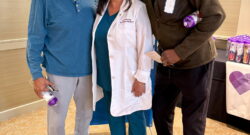
This past April, the Orlando–Tampa region hosted a remarkable health screening event that brought together medicine, dentistry, and professional football in an extraordinary way. Over 50 retired NFL players gathered for a special NFL Players Association (NFLPA) and Professional Athletes Foundation (PAF) health screening, where they received vital care and evaluations from top medical professionals. Among the leaders at this event were Dr. Paul Eckstein, a highly respected dentist in Seminole, Florida, and his son Dr. Dalton Eckstein, DMD, who together played a key role in helping retired athletes access much-needed treatment and education. This family effort was made possible through Dr. Paul Eckstein’s long-standing commitment as a loyal member of the American Sleep & Breathing Academy (ASBA). His dedication to the organization and its mission positioned him to take part in this groundbreaking partnership between the ASBA, LHF, NFLPA, and PAF. The April screening was led in partnership with Andre Collins, Executive Director of the Professional Athletes Foundation, whose leadership has long been central to improving the health and wellness of retired NFL players. Also supporting the event were David Gergen, Executive Director of the ASBA, and son, John Gergen, who contributes to the ASBA but primarily directs Pro Player Health & Wellness alongside David. Their combined leadership has been critical in bridging dental sleep medicine with professional athlete outreach. Dr. Paul and Dr. Dalton have been expanding their knowledge in advanced dental sleep medicine. They have attended numerous study clubs and training programs, learning to treat patients with the innovative Cricket open-loop appliance, a therapy now being implemented to help former NFL players improve sleep and overall health. In addition, they are working with Dr. Francisco Eraso of Indianapolis, a highly respected Master Diplomate of ASBA, to provide players with access to the G-Force clear aligner system, ensuring athletes can receive comprehensive oral and airway care. Dr. Eraso is a respected radiologist and orthodontist and one of the founders of Beam Readers. He is currently teaching a high-level curriculum at ASBA with Dr. Tim Adams. As father-and-son teams, David and John Gergen, Paul and Dalton Eckstein they provided an excellent event for the former NFL players. They provided screenings, consultations, and follow-up care to the former athletes at the Orlando event. Together, they represented ASBA’s mission to expand awareness and treatment of sleep-related breathing disorders nationwide. For Dr. Paul Eckstein, this event was a recognition of his years of loyalty to ASBA and his passion for helping patients live longer, healthier lives. For Dalton, a rising leader in dentistry, it marked the beginning of his own journey serving both his local community and specialized groups like retired professional athletes. The impact was clear: more than 50 former NFL players left the April Orlando screening better equipped to protect their health and their future. Thanks to the collaboration of the NFLPA, PAF, ASBA, Pro Player Health & Wellness, Andre Collins, and dedicated doctors like Paul and Dalton Eckstein, this event served as a shining example of how professional partnerships can deliver real change. Due to the tremendous impact this event had, the news spread throughout the NFL Player community, resulting in former All-Pro receiver Ahmad Rashad reaching out to the Eckstein’s for treatment. Ahmad told David that he is going to spread the awareness of this fantastic program. He expressed how happy he was that he went to the Eckstein’s and that he appreciated the high-quality service that they provided. They educated him on sleep apnea as well as treating him.
Congratulations to Dr. Katherine Ahn Wallace – Record-Breaking Achievement & Exciting ASBA News
We are thrilled to share some incredible news from the ASBA community. Please join us in congratulating Dr. Katherine Ahn Wallace for setting a new record on the Diplomate Written Exam with a staggering score of 92% — the highest ever achieved! This remarkable accomplishment is a true testament to her dedication, expertise, and passion for advancing the field. In light of this achievement, we are excited to announce that Dr. Ahn’s clinic in California will serve as the host site for the upcoming ASBA Mastery Program. This program will provide an unparalleled opportunity for advanced training and hands-on experience with leaders in the field. The exact dates and times will be announced soon, as we are currently finalizing the details. Stay tuned for updates and make sure to visit the ASBA website for the latest information. Once again, congratulations to Dr. Ahn Wallace on this historic achievement — and to all of you who continue to raise the bar in dental sleep medicine.
Rescuing Sleep
By Dr. Jerry Hu It is without a doubt, the most researched, most documented, and most accepted type of appliance used in dental sleep medicine is the customized mandibular repositioning device (MRD, MAD, MAS, etc.). From using evidence based meta analysis to randomized controlled studies, the customized oral appliance, especially the Herbst style from all the government studies, we can firmly conclude without dispute that it is the first line of treatment choice in dental sleep medicine. The remarkable ability that the oral appliance has to make dramatic improvements in sleep study parameters, (such as NADIR O2, AHI/RDI/REI when the proper bite and appliance type is selected) is widely known in the medical and dental community. In essence, the properly made device is truly a rescue device. Patients who already show CPAP intolerance and failure should immediately be given customized oral appliance therapy alternatives by sleep physicians and the entire medical- healthcare community. Fabricating the proper appliance is also critical. Sleep dentists using the trusted and reliable airway bite techniques and selecting the proper type of appliance are equally important. Combining sleep hygiene instructions and evaluating nutrition, mental health, and exercise plans are also essential. With all the right ingredients at play, the customized oral appliance can be a life saving treatment choice for sleep apnea patients. They truly can rescue the patient, even at severe levels of obstructive sleep apnea (OSA). There are several articles and evidence based science that prove the success of Herbst style appliances. Using qualified and skill technicians who know how to engage undercuts, design anatomy and proper retention into the fabrication process is absolutely crucial. The type of Herbst arm used and how it is connected all matter as well. With properly made Herbst appliances, it can be proven that severe AHI levels even above 60-70 can be taken down well under 5 (some even to 1 or 0) with proper calibration and follow through by sleep dentists. Next is understanding the Ricketts Phonetic Silibant Bite. It sure is a very reliable method to look at every patient’s own unique mandibular movement parameters and limits. Paying close attention to patients’ mandibular excursions as they are counting numbers is key. Incorporating the methods recommended by Dr. Ricketts and Dr. Speigel, such as shouting the word, “Shun,” and correlating letters such as “N” for vertical are a part of taking a proper bite. Discerning nasal airway issues while reclined also is a paramount part of the data collection. When the proper bite and appliance such as the Herbst is used, the sleep physicians and the entire medical community will have confidence reinforced in dental sleep medicine. This also means the sleep dentist needs to identify the whole picture of the patient. If the patient needs to see an otolaryngologist for turbinate reduction, RhinAer or VivAer, the dentist should refer and work interdisciplinary. The same with cardiologists on heart issues, neurologists with Alzheimer’s, memory, etc, pulmonologists on lung and breathing, oncologists with cancer, which all have connection to sleep apnea treatment success. Working with nutritionist, exercise trainers, myofunctional therapists, physical therapists and specialized chiropractors (SOT) are also necessary at times. Every patient who walks in the door has their own unique phenotype, their own medical history, medications and past treatments, etc. It is therefore important the time and attention is given when taking on dental sleep medicine cases for OSA. In the literature, it is found that there are definite non-responders to customized oral appliance therapy. Albeit a small percentage, those patients have the option of epigenetic appliances. But it is extremely important for severe apnea patients, who so many are CPAP intolerant and non compliant, that the tried and true customized oral appliance, such as the Herbst is used – rescuing immediately. Epigenetic appliances such as open loop cricket, occlusal correctors, sagittals, crozats, DNA, etc., are great considerations for non responder OAT patients. Appliances such as the open loop cricket is also fantastic for cranial strains and distortion correction. With the proven evidence based science, the customized oral appliance truly is a life saving rescue appliance. It should always be considered as the first line treatment choice in dental sleep medicine. For those learning and diving into dental sleep, it is important to know that this treatment choice is also the most recognized and accepted one by board certified sleep physicians. Remember, no treatment can proceed without the diagnosis, referral and letter of medical necessity from a sleep physician. I hope you all take these pearls and excel in dental sleep! Let’s continue to save lives together as thorough and caring sleep dentists! Dr. Jerry Hu